Dwelling with the Psalms

IlumPsalter“In the Psalter you learn about yourself.  You find depicted in it all the movements of your soul, all its changes, its ups and downs, its failures and recoveries.  Moreover, whatever your particular need or trouble, from this same book you can select a form of words to fit it, so that you do not merely hear and then pass on, but learn the way to remedy your ill. ” San Athanasios of Alexandria, “Letter to Marcelinus”

In the next few weeks, I will be sharing some insights on the Psalms, specifically on praying the Psalms. I will also list some of my favorite resources for praying the Psalms in public worship, and privately.

A few years ago, through the ministry of one of my mentors, Dr. Emily Brink, I started to discover the Psalms in a deeper way. It all started with a serendipitous introduction at the house of friends in Waco, TX.  Dr. Brink had just delivered a lecture at Baylor University; and my friends thought that we should meet. Dr. Brink would eventually invite me to participate at the Calvin Symposium for Worship. And I have either attended or presented many times. A colleague of mine jokes every time I go to Grand Rapids, “Oh, you are going to visit your tribe”! Well the Dutch Reformed, and the Latinos there too, have become a tribe of sorts.  And the Psalms are a big reason why we have forged a special bond. People like Dr. Brink and Dr. John Witvliet have become more than friends, they have also encouraged and supported my vocation as a liturgical composer.

As a composer and a songwriter I spend a good deal of my life looking for lyrics, and writing lyrics.  And, thanks be to God, the Psalms have liberated me from the burden of making up lyrics. Now, don’t read me wrong, I am not saying that free lyrics and poetry should not exist (that’s a separate conversation.) However, for composers who write in the Christian tradition, the Psalms liberate us to be messengers of the Gospel, and facilitators of Christian prayers in the Church.

I have become persuaded that we proclaim the Gospel more faithfully when we give the Psalter preeminence in our Christian services, and also in our daily prayers. From early times, the Church has taught that Christ is the voice who prays in the Psalms. As in the Lord’s prayer, God is putting words in our mouth that we can pray back to him. And, in the Psalms, Christ prays with us! Does that not give sweet comfort to our hearts? People like St. Agustine, St. Athanasios, and Dietrich Bonhoeffer speak of this. And, I hope, we can unpack what they say in the next few months. That being the case, when we pray the Psalms, we are announcing the Good News of Jesus Christ.

The Psalms are not only the voice of Christ, but they are also about Him. Thus, our praises have a deeper meaning as we celebrate God as Creator; and in the Psalms of lament, the suffering Christ walks with us in our trials.

The early Christians have also taught us that the Psalms are also the voice of the Church, and the voice of those who walk in The Way.  Therefore, the Psalms are a great place for the imagination to flourish! Artists, poets, writers, composers, and Christians of every vocation do well to let their prayers, hymns, and our life together flow from the Psalter, or as Bonhoeffer calls it, the prayer book of the Church.

Let the words of my mouth, and the meditation of my heart, be acceptable in thy sight, O Lord, my strength, and my redeemer. Psalm 19:14
Alan Jacobs’ Blog and Newsletter

Dr. Jacobs is a colleague from Baylor University. He came to us via Wheaton College, where he taught literature for many years. When he is not teaching or writing books, he shares with us wonderful thoughts and information on art, books, food, music, etc. In short, he is a culture maker and a cultural guide!

If you are feeling short on ideas on what to read, listen, or eat; or, if you just need to smile while also using your brain, follow him!

His newsletter is here. Follow link in the bottom of page to subscribe.

And his blog, is here.


Prayer of St. John Chrysostom Before the the Reading of Scripture

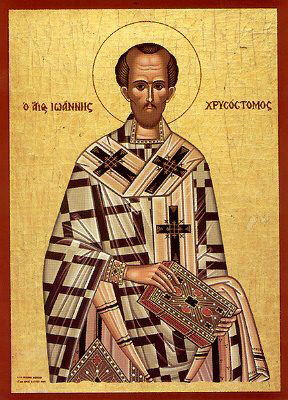
I found this beautiful prayer of St. John Chrysostom (“John the golden mouth”). St. John (4th cent.) was a prince among preachers, with a passion for building up Christians on the Word of God. He became Bishop of Constantinople, but was exiled because the empress disapprove of his prophetic and convicting sermons. In the icon below he is depicted with a larger than usual head, as an homage to his superior intellect!

John_Chrysostom

Here’s a good prayer for before opening God’s Word, or listening to a sermon:

“O Lord Jesus Christ, open  the eyes of my heart, that I may hear your word and understand and do your will, for I am a sojourner upon the earth. Hide not your commandments from me, but open my eyes, that I may perceive the wonders of your law. Speak unto me the hidden and secret things of your wisdom. On You  I set my hope, O my God, that You will enlighten my mind and understanding with the light of your knowledge, not only to cherish those things which are written, but to do them; that in reading the lives and sayings of the saints I may not sin, but that such may serve for my restoration, enlightenment and sanctification, for the salvation of my soul, and the inheritance of life everlasting. For You are the enlightenment of those who lie in darkness, and from You comes every good deed and every gift. Amen.”

And, since you like the Church Fathers, let me also invite you to listen to this hymn, Prince of Peace, inspired by St. Athanasius On the Incarnation:

For score, contact me.


Oración de Cuaresma de San Efrén

Señor y Soberano de mi vida.
Líbrame del espíritu de indolencia, 
desaliento, vanagloria y palabra inútil.
Y concédeme a mí, tu siervo pecador 
el espíritu de castidad, humildad, paciencia y amor.

Si, Rey mío y Dios mío, 
concédeme de conocer mis faltas
y no juzgar a mis hermanos 
porque eres bendito por siempre. Amén.

San Efrén el Sirio vivió en el siglo cuarto, y fué un gran defensor de la fé cristiana.

Que ésta bella oración nos acompañe mientras caminamos con Jesús a la cruz.

Lenten Prayer of St. Ephrem (306-373 A.D.)

O Lord and Master of my life, take from me the spirit of sloth, despair, lust of power, and idle talk.  But give rather the spirit of chastity, humility, patience, and love to Thy servant. 

Yea, O Lord and King, grant me to see my own transgressions, and not to judge my brother, for blessed art Thou, unto ages of ages. Amen.

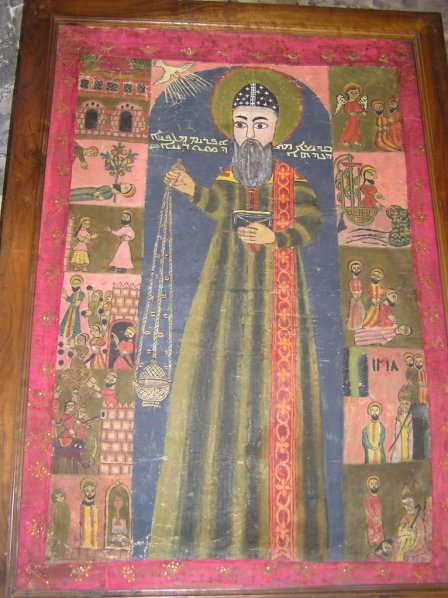
St. Ephrem  the Syrian was a a gifted teacher, poet, teacher, orator, and a courageous defender of the faith. He opposed the many false doctrines rampant at his time, always remaining a true and forceful protector of Christian doctrine.
My loving wife Susan, who is Eastern Orthodox, introduced me a couple of years ago to this simple and beautiful prayer. St. Ephrem’s words are pregnant with meaning – and I think it captures in it the essence of many Scriptures: The Lord’s prayer, the Greatest Commandments, Romans 12, and 1 Corinthians 13 come to mind.In these days of loud and mean-spirited discourse, it is good for us Christians to bow our heads as we mourn for our own sins during Lent.  The Lord Jesus Christ calls us to be living icons of grace and truth; His ambassadors in this wounded planet.  In this prayer, we have been gifted a sweet treasure as we journey with Jesus Christ to the Cross!ST Ephram