¡Vámos al Encuentro!

Un nuevo canto que compuse después de una conferencia en San Antonio. Escuchar aquí:

La letra dice:

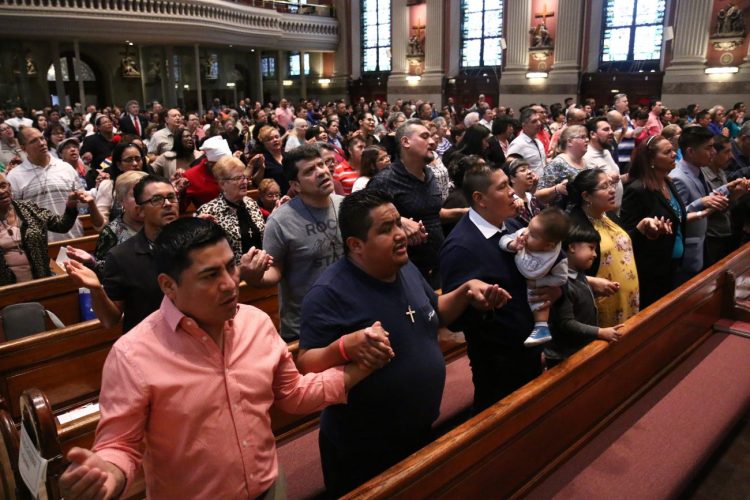
Este es el día de Eucaristía,

Día que hizo el Señor.

Este es el día, ¡Qué maravilla!

Es la gran fiesta de Dios.

Coro: Vamos a un encuentro divino,

en la Copa y el Pan;

Cristo está contigo y conmigo,

Y su cuerpo la vida dá.

León XIV: Cristo con Nosotros en Nuestra Depresión

Pregunta: Santo Padre, en un mundo donde las cosas se gritan, hay aspectos de la vida que permanecen callados, con vergüenza; como la depresión, una enfermedad silenciosa que afecta a muchas personas, jóvenes y adultos, y que conlleva una oscuridad, aislamiento y un dolor inmensurable. A veces, este dolor es tan abrumador que la idea de desaparecer parece la única salida. Yo misma luché por salir de esta enfermedad, en silencio durante años, y una noche de viernes perdí la batalla e intenté quitarme la vida. Estoy aquí porque Dios me dio una segunda oportunidad, y le estaré eternamente agradecida, pero hay muchos otros que continúan enfrentándose a esta oscuridad. Por eso, le pregunto de todo corazón: ¿Dónde podemos ver a Dios cuando la oscuridad es absoluta y ya no podemos más? ¿Cómo podemos confiar en Dios, cuando parece que nada, ni uno mismo, vale la pena?

Respuesta: Ante todo, gracias por compartir hoy tu experiencia de sufrimiento. Me conmueve que puedas hablar de ella, que estés aquí entre nosotros y que hayas encontrado la fuerza de acoger esta segunda posibilidad que el Señor te ha dado. Te has levantado y has retomado el camino y este es un milagro maravilloso que vemos en muchos personajes del Evangelio: en contacto con Jesús, aun quien se siente perdido recobra confianza en la vida, sana la enfermedad y puede levantarse para volver a vivir.

En la teva pregunta, t’has referit en primer lloc a la “malaltia silenciosa” que és la depressió, i és important prendre consciència de com la salut mental es veu cada vegada més amenaçada en el context de societats que es consideren avançades. És un senyal de que hi ha quelcom profundament equivocat en una certa idea de creixement que sotmet a les persones a pressions i tensions que comprometen equilibris fonamentals. Per això es necessita un sistema sanitari que inclogui entre les seves prioritats aquest malestar invisible i generalitzat, que afecta també als joves.

Les teves paraules, tanmateix, ens han mostrat que el dolor posa a prova la fe i el sentit que li donem a la vida. Això és cert per a tothom, no solament per aquells que en algun moment travessen la prova de la malaltia.

[En tu pregunta, te has referido en primer lugar a la “enfermedad silenciosa” que es la depresión, y es importante tomar conciencia de cómo la salud mental se ve cada vez más amenazada en el contexto de sociedades que se consideran avanzadas. Es una señal de que hay algo profundamente erróneo en una cierta idea de crecimiento que somete a las personas a presiones, expectativas y tensiones que comprometen equilibrios fundamentales. Por eso se necesita un sistema sanitario que incluya entre sus prioridades este malestar invisible y generalizado, que afecta también a los jóvenes.

Tus palabras, sin embargo, también nos han mostrado que el dolor pone a prueba la fe y el sentido que le damos a la vida. Esto es cierto para todos, no sólo para quienes en algún momento atraviesan la prueba de la enfermedad.]

Mientras te escuchaba, pensé en esas horas de oscuridad, de angustia y de dolor que vivió Jesús cuando se acercaba la hora de su muerte. Los Evangelios, en los momentos de la última cena y de la oración en Getsemaní, subrayan que estaba cayendo la tarde, que estaba anocheciendo, así como poco antes de morir en la cruz nos dicen que “toda la tierra quedó en tinieblas”. Pero, en realidad, no se trata sólo de un sufrimiento personal; el Hijo de Dios está asumiendo en su propia carne toda la angustia, la soledad y el sufrimiento de la humanidad. En esas horas oscuras, muriendo en la cruz, Jesús comparte nuestro dolor y nos revela el rostro de un Dios compasivo, que carga con nuestras penas, que sufre con nosotros, llora nuestras lágrimas y permanece a nuestro lado con su presencia llena de amor y misericordia.

Pasar por esta experiencia es difícil, lo atestigua varias veces la Sagrada Escritura; hay momentos de oscuridad y de sufrimiento que nuestra sociedad hace callar, porque precisamente algunos modelos culturales nos quieren siempre vencedores y perfectos y, por eso, el límite, la fragilidad y el dolor deben ser eliminados, o confinados al silencio ensordecedor de la soledad o incluso de la vergüenza. Y, en estos momentos, podemos pensar instintivamente que también Dios nos haya abandonado. Pero la cruz de Jesús nos dice que Dios no nos abandona, que Él sigue crucificado con nosotros en el momento del dolor y de la soledad extrema, que Él recoge no sólo nuestras lágrimas, sino el grito de nuestro sufrimiento que otros no escuchan, un grito que Jesús hizo suyo en la cruz, diciendo “Dios mío, Dios mío, ¿por qué me has abandonado?”.

Hay una catequesis sobre las últimas horas de Jesús, en la que Benedicto XVI dice que su sufrimiento se vuelve oración y grito, y que eso vale también para nosotros: frente a las situaciones más difíciles y dolorosas, cuando Dios parece ausente, debemos confiarle una vez más las cargas que llevamos en el corazón, incluso gritándole a Él, incluso protestando como Job, seguros de que de algún modo Él se hace presente y está cerca aun cuando aparentemente calla. Pero pienso que no podemos hacerlo solos. En las horas de dolor, al menos en cuanto sea posible, debemos abrirnos a alguien que nos ayude a expresar una oración sencilla, que nos acompañe con discreción sin la prisa de explicarnos ese dolor, que nos tome de la mano y nos haga salir de este grito.

Estas experiencias ofrecen un mensaje también a nosotros creyentes, a toda la Iglesia: no debemos espiritualizar el dolor, reconduciéndolo superficialmente a la “voluntad de Dios” o a algún misterioso proyecto suyo, porque esto corre el riesgo de minimizar ese sufrimiento, de silenciarlo, de herir a las personas. Dios no quiere el sufrimiento, lo lleva con nosotros y nos invita a confiar en Él de modo perseverante. Recordemos lo que decía el Papa Francisco: con Dios, la vida renace siempre.

Leo XIV: Christ’s Hope in Our Depression

Question: Holy Father, in a world where things are shouted from the rooftops, there are aspects of life that remain unspoken, shrouded in shame; like depression, a silent illness that affects many people, young and old, and brings with it darkness, isolation, and immeasurable pain. Sometimes, this pain is so overwhelming that the idea of ​​disappearing seems like the only way out. I myself struggled to overcome this illness, silently for years, and one Friday night I lost the battle and tried to take my own life. I am here because God gave me a second chance, and I will be eternally grateful, but there are many others who continue to face this darkness. That is why I ask you with all my heart: Where can we see God when the darkness is absolute and we can go no further? How can we trust in God when it seems that nothing, not even ourselves, is worthwhile?

Answer: First of all, thank you for sharing your experience of suffering today. I am deeply moved that you can speak about it, that you are here among us, and that you have found the strength to embrace this second chance the Lord has given you. You have risen and resumed your journey, and this is a wonderful miracle we see in many figures in the Gospel: in contact with Jesus, even those who feel lost regain confidence in life, are healed of their illness, and can rise again to live.

In the last question, you referred first to the “silent malaise” that is depression, and it is important to be aware of how mental health is increasingly threatened in the context of societies that are considered advanced. It is a sign that we have deeply mistaken a certain idea of ​​growth that subjects people to pressures and tensions that compromise fundamental balances. Therefore, it is necessary to have a health system that includes among the six priorities this invisible and general malaise, which also affects young people.

Les teves paraules, tanmateix, have shown that pain poses a test of faith and the feeling that leads us to life. Això is cert for everyone, not only for those who at some point cross the path of illness.

In your question, you referred first to the “silent disease” that is depression, and it is important to be aware of how mental health is increasingly threatened in the context of societies that consider themselves advanced. It is a sign that there is something profoundly wrong with a certain idea of ​​growth that subjects people to pressures, expectations, and stresses that compromise fundamental balances. That is why we need a healthcare system that includes this invisible and widespread malaise, which also affects young people, among its priorities.]

Your words, however, have also shown us that pain tests our faith and the meaning we give to life. This is true for everyone, not just those who at some point go through the trial of illness .

As I listened to you, I thought about those hours of darkness, anguish, and pain that Jesus experienced as the hour of his death approached. The Gospels, in the passages of the Last Supper and the prayer in Gethsemane, emphasize that evening was falling, that night was getting dark, and that shortly before dying on the cross, they tell us that “the whole land was plunged into darkness.” But, in reality, it is not just personal suffering; the Son of God is taking upon himself all the anguish, loneliness, and suffering of humanity. In those dark hours, dying on the cross, Jesus shares our pain and reveals to us the face of a compassionate God, who bears our sorrows, suffers with us, weeps our tears, and remains by our side with his presence full of love and mercy.

Going through this experience is difficult, as Sacred Scripture testifies several times; there are moments of darkness and suffering that our society silences, precisely because some cultural models want us to always be victorious and perfect, and therefore, limitations, fragility, and pain must be eliminated, or confined to the deafening silence of loneliness or even shame. And, in these moments, we may instinctively think that God has also abandoned us. But the cross of Jesus tells us that God does not abandon us, that He remains crucified with us in the moment of pain and extreme loneliness, that He gathers not only our tears, but the cry of our suffering that others do not hear, a cry that Jesus made His own on the cross, saying, “My God, my God, why have you forsaken me?”

There is a catechesis on the last hours of Jesus, in which  Benedict XVI  says that his suffering becomes prayer and a cry, and that this also applies to us: faced with the most difficult and painful situations, when God seems absent, we must entrust to him once again the burdens we carry in our hearts, even crying out to him, even protesting like Job, certain that in some way he makes himself present and is near even when he is seemingly silent. But I think we cannot do this alone. In times of pain, at least as far as possible, we must open ourselves to someone who can help us express a simple prayer, who can discreetly accompany us without rushing to explain our pain, who can take us by the hand and lead us out of this cry.

These experiences offer a message also to us believers, to the whole Church: we must not spiritualize suffering, superficially attributing it to the “will of God” or some mysterious plan of His, because this risks minimizing that suffering, silencing it, and wounding people. God does not want suffering; He bears it with us and invites us to trust in Him perseveringly. Let us remember what Pope Francis said : with God, life is always reborn.