
Source: Missing Migrants Project
The statics are heartbreaking. Tim Muth writes:
c This compares to 212 deaths in all of 2018. The number of deaths has increased every year since 2014.”
Read his full post here.
Composer, Liturgist & Cultural Promoter
Source: Missing Migrants Project
The statics are heartbreaking. Tim Muth writes:
c This compares to 212 deaths in all of 2018. The number of deaths has increased every year since 2014.”
Read his full post here.
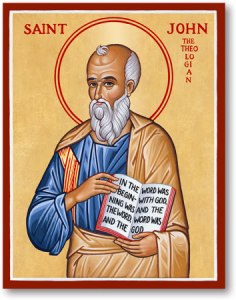
I have lately discovered the exquisite poetry of Malcolm Guite. He is well-known. It just happens that most of the poetry I read is in Spanish…
As some of you know, I have been journeying with the Gospel of John for a while. Here’s Malcolm‘s poem on the saint and his gospel.
Credits: Hear Mr. Guite read his poem here. And explore the site for more of his wonderful poetry.
John
This is the gospel of the primal light,
The first beginning, and the fruitful end,
The soaring glory of an eagle’s flight,
The quiet touch of a beloved friend.
This is the gospel of our transformation,
Water to wine and grain to living bread,
Blindness to sight and sorrow to elation,
And Lazarus himself back from the dead!
This is the gospel of all inner meaning,
The heart of heaven opened to the earth,
A gentle friend on Jesus’ bosom leaning,
And Nicodemus offered a new birth.
No need to search the heavens high above,
Come close with John, and feel the pulse of Love.
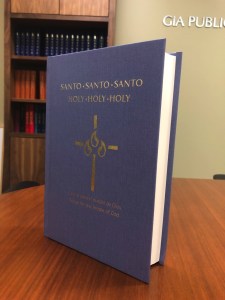
Update: You can order the hymnal here and now from GIA Publications!!!
I have been part of the editorial team, led by the Calvin Institute of Christian Worship, that has been working on the largest bilingual hymnal (Spanish-English) ever published. With about 800 hundred songs containing Latin American Spirituals, beloved hymns, songs from around the world, contemporary songs by authors like Sandra McGracken, Marcos Witt, Audrey Assad, and many others.
He sido parte del equipo editorial que ha producido el himnario bilingüe mas extenso que ha sido publicado hasta la fecha. Con aproximadamente 800 coritos, himnos amados, y canciones contemporáneas.
Santo, Santo, Santo / Holy, Holy, Holy will be published in several editions, including the following versions: Choir edition; Keyboard Accompaniment editions; Guitar editions. In addition to physical printed editions, GIA also anticipates publishing electronic counterparts of each physical edition for iOS and Android.
This hymnal as a depository of beauty. I’ve enjoyed working from the inside of a project like this. You will find songs that are beautiful in words, sound and doctrine. For more on bilingual singing, please see this article.
Who will benefit from this hymnal? ¿Quiénes se beneficiarán?
-Congregations who sing bilingually
– Schools, universities and seminaries
– Families who want to sing together
– Camps and conferences
St. Athanasius, Archbishop of Alexandria
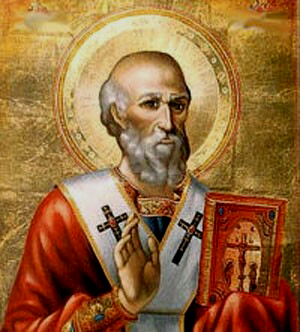
St. Athanasios was born around 295, 296 A.D., in Alexandria, Egypt. His nationality was Egyptian, as was likely his ethnicity, but culturally he was Greek due to his education and his family’s social status. He was born into a pious Christian family that was affluent enough to afford Athanasios the best education available.
Athanasios grew up during the last major episode of persecution of Christians in the Roman Empire. As a result, Athanasios saw his faith put into action in an exceptional way, through the martyrdom of many people he knew, and this proved to be a time of great spiritual formation for him. During this time, perhaps to escape outbreaks of persecution in Alexandria, Athanasios spent time in the desert outside of Alexandria, where years before, persecuted Christians had fled and established communities. There he befriended a holy man, whom we know today as Saint Anthony the Great, who founded the practice of monasticism. The time that Athanasios spent in the desert also afforded him the opportunity to see his faith put into action in a different way, in a slower form of martyrdom, by observing Christians who were so intentional about growing their faith that they chose to continue living in a harsh physical environment because it aided them in their prayer life and relationship with God.
Athanasios spent his youth developing his relationship with God as he pursued his education. He participated actively in the life of the Church, regularly attending divine services, and at some point likely during his adolescence, became a deacon and assisted the Archbishop of Alexandria (also known as the patriarch) in church services. He studied in much depth and wrote extensively about the theology and Tradition of the Church as well as the heretical issues then threatening the Church. By his early 20s, Athanasios had written a two-part book that is a classic of Christian literature, called Against the Heathen and On the Incarnation.
In his late 20s, Athanasios participated in the Council of Nicaea, convened by Emperor Constantine the Great. Although only a deacon and unable to vote at the Council, Athanasios nevertheless contributed substantially to the Council’s deliberations, namely denouncing the Arian heresy, for which the Council had convened, and helping to compose the Church’s statement of faith, or its creed. Through his participation at the Council, other Church leaders noted his gifts of erudition, oratory, and courage, and he began to gain recognition as a champion of the True Faith.
Within a year or so after the Council at Nicaea, the Patriarch of Alexandria reposed in the Lord. Before his departure, he named Athanasios his successor, making Athanasios the Patriarch of Alexandria at about the age of 30, an extremely young age to become a bishop. He held this position for 47 years, but endured almost endless persecution throughout his tenure because of his steadfastness in defending the Faith and refuting heresies. As a result, he was exiled—that is, removed from his position as bishop and sent away from Alexandria—five times for a total of 17 years. He was reinstated to his position after each occasion of exile because each was the result of misinformation and/or malice by his enemies. These setbacks, however, did not deter Athanasios, who continued to write and labor as a good shepherd to protect the flock in his care.
Aside from his writings, contributions to the Council of Nicaea, pastoral duties, endurance of persecution, and prayer life, Saint Athanasios is recognized for setting forth to the Church the complete list of 27 books to be included in the New Testament. Other lists were proposed, but it was the list that Athanasios submitted that was accepted and adopted by the Church in 367. Athanasios, known in Christendom as Saint Athanasios the Great and esteemed as a Father of the Church, fell asleep in the Lord in 373.
Compiled by Susan M. Colón
© 2019, Susan M. Colón – Used by permission
Christ my God, set my heart on fire with love in You, that in its flame I may love You with all my heart, with all my mind, and with all my soul and with all my strength, and my neighbor as myself, so that by keeping Your commandments I may glorify You the Giver of every good and perfect gift. Amen.
 Carlos Colón